countryside · crafts & knitting · in the woods · summer · wildlife

June: dog roses, daisies and dragonflies


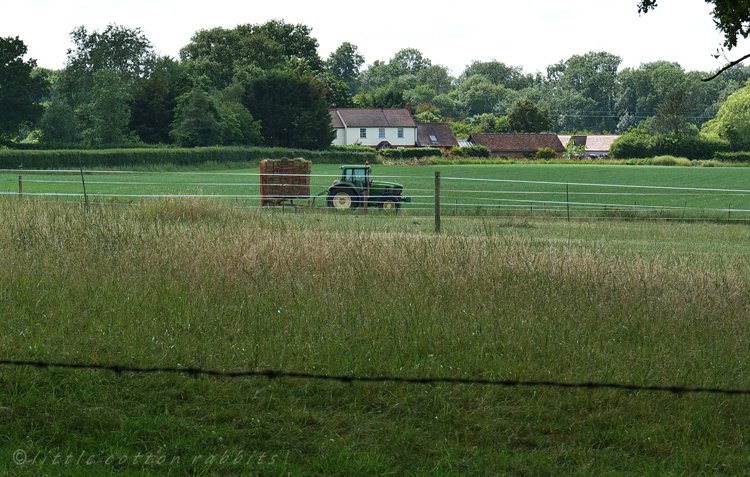
Many of the places where Toby and I take our weekly walks are designated nature reserves, and so are a haven to all kinds of wildlife, from tiny insects and invertebrates, right up to large mammals such as badgers and deer. One of the best things about walking most days is the chance to see the different species that come with the changing seasons, and in June summer has arrived with us. Within the hedgerows and all along the path margins there is now verdant growth, and it seems that every leaf is home to some small creature; all manner of insect larvae, caterpillars, beetles, flies, bees and spiders. I carry my secateurs on all of our walks, though perhaps a machete would be more appropriate as our familiar pathways are frequently overgrown by new growth since the previous week and we trim our way through again. I’m constantly saying ‘careful, stingers’ and ‘mind the prickles’ to Toby so that he doesn’t brush against the stinging nettles or snag himself on the brambles and wild roses that continually encroach on our route.

The beginning of June was cool and green and usually this month is the segue between spring and summer, but this year there was no gentle transition and the full force of summer heat quickly arrived. Now at the end of June the countryside is beginning to look parched and I’m hoping that some rain arrives with us soon. We’ve had it forecast a couple of times, but it seems to evaporate on it’s way across the country before reaching this south east corner. We could do with some good old English summer weather, ie. torrential rain ๐Ÿ™‚

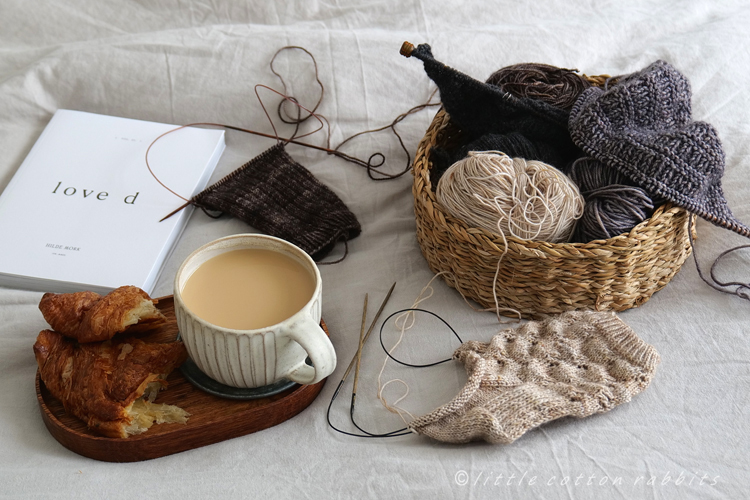
Knitting is not something that I enjoy much in weather this hot, but I have been making good progress on my new 9 inch animal and the patterns have just gone out to be tested with a lovely group of people who are likely to be a lot better at error spotting than I am right now – towards the end of a pattern you tend to be blind to the mistakes that you know are in there somewhere. Anyway, as it will be ready in the next couple of weeks I thought it was time to reveal what I’ve been working on, so first a clue in the form of a riddle…

Red or grey or rare times black,

tail curled across my back,

storing nuts for winter time,

in a treetop home to where I climb.

and then a picture…

(and yes, that is a basket full of failed tails, 19 of them!)

I’ll post full details as soon as the patterns have been fully checked and are ready to share, ’til then I hope you have a good couple of weeks where you are, J x


Nature notes from June:

  • Week 1: Some of the hedgerows at Panshanger are being decimated by ermine moth caterpillars, many thousands of them congregate, eat all the leaves and weave their webs, completely covering some of the trees. The webs are amazingly thick and strong and look devastating to the tree, but once the caterpillars pupate they will recover and regrow leaves.
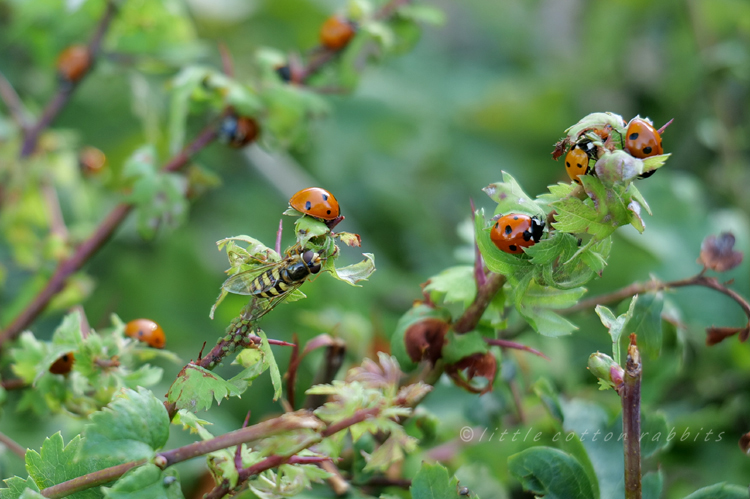
  • Week 2: Dog rose, daisies and cow parsley are everywhere, simple beauty and a magnet for bees, beetles and hoverflies
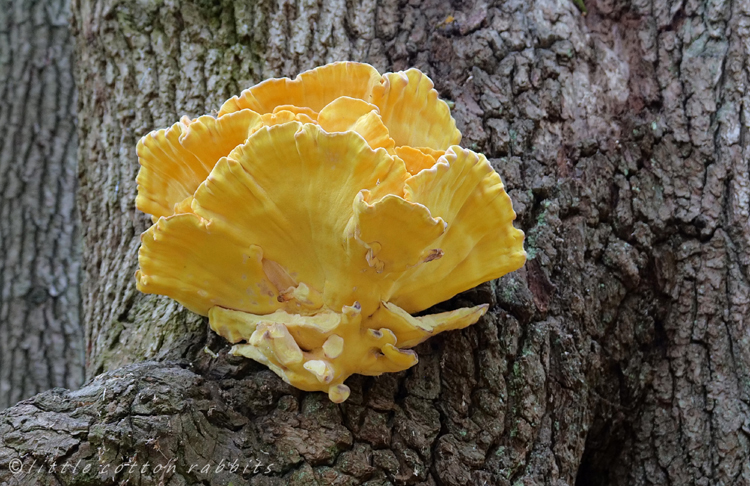
  • Week 3: Out in the woods there are insects everywhere you look, nature is a marvel, also spotted some summer fungi on a tree
  • Week 4: This week has been the hottest so far, too hot to sleep well at night and the constant sun is parching the woods and countryside. All of the streams and brooks that run through the woods are now completely dry, and I look through the exposed pebbles on the stream bed for hag stones


countryside · foxes in my garden · in the woods · spring · wildlife

May: and the full glory of Spring

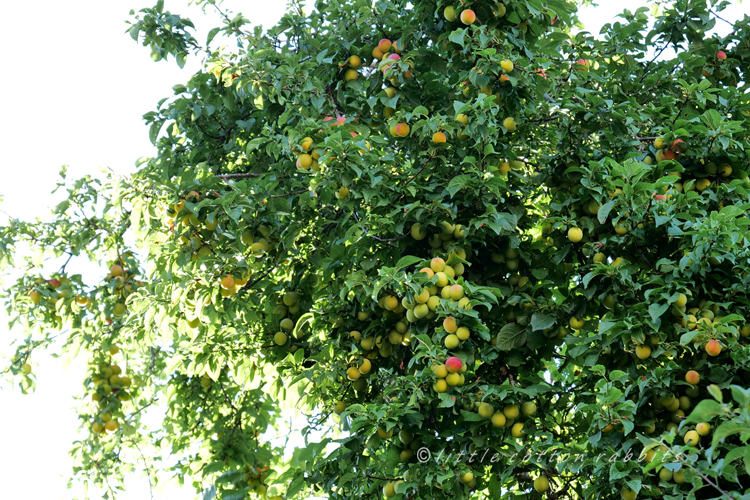
There is something so exuberant and joyful about May, and this one in particular has been sublime as we’ve had such amazing weather, with each day warm, dry and sunny. The dependable sun has warmed the land and Spring has now arrived with a flourish. Everything is freshly green and blossoming, perfuming the breezes with an ever changing array of floral scents. Out in the woods the trees have grown a connected canopy of dense leaves and the lanes that we drive along on our way to and from the woods are once again secret, shady tunnels. It is such a beautiful time to be out in the countryside, so much is happening and every walk we go on brings new delights to see and enjoy. I’ve paid my annual spring visit to the orchard where I spent a wonderful few hours just wandering quietly with my camera. At lunch time I sat by the little pond and watched a pair of Canada geese shepherd their 5 small chicks across to the other side.

Back at home I’ve enjoyed my first garden knitting session of the season, it’s lovely to sit outside again on Toby’s swing and listen to the birds in the tree above me and I look forward to more gently swinging garden knitting time over the next few months.

The highlight of the month though was on May 2nd, when just after 8pm Katsue brought her cub with her for a visit, he’s quite shy but obviously just weaned on to solid foods as he ran over to investigate what his mum was eating. I had to take pictures through the window as he was very skittish and wary of us and we were all enthralled, holding our breath and hoping for the moment to last. I was so pleased that Amy got to see a cub this time as she missed the time that Kit brought her 3 cubs to visit. It seems that Katsue just has the one cub, as we’ve not seen any others and although she’s taking plenty of food away each time the cub has not been back to our garden for a couple of weeks. He’ll be hidden away somewhere safe, and growing a little each day under the watchful eye and dedicated care of his mum.

In knitting news there’s not much to tell. I’m so eager to share details on the latest animal design but I’m going to have to keep you in suspense just a little longer, as it is not yet close enough to being finished. We have however started photography so it is progressing. Once we’ve finished all of the shots and I’ve got the layouts done I’ll be in a position to reveal its identity.

Well, I hope that things have been good for you this last month and that the coming month brings some small joys your way. I’ll see you again in a few weeks with notes of what we’ve been up to in June, J x

Nature notes from May:

  • Week 1:ย  The bluebells are at their peak and filling the whole wood with their wonderful scent. May 3rd, heard the first cuckoo and saw newly emerged damsel flies. Buttercups and cowslips are out in the meadows. Oak galls are visible amongst the new oak leaves, in a month or so they’ll harden into small brown balls, but right now they are pretty and pink.
  • Week 2:ย  Hedgerows are in full froth, with hawthorn blossom (also known as May blossom) thick on the branches above and great drifts of cow parsley below. Saw the first swallows of the season, just arrived from their long journey from Africa. First dragonflies spotted at the Panshanger lake.
  • Week 3:ย  It’s apple blossom time and the old, gnarled trees at the orchard wear their most beautiful attire of the year. A thick carpet of pungent wild garlic covers the floor of the small wood, a beautiful galaxy of star like flowers.
  • Week 4:ย  The great tit chicks fledged the nest box into the big, wide world. Rain arrived at last, not much but so very needed after such a long dry spell, the petrichor smell is wonderful.
crafts & knitting · knitting tips

Knitted increase methods for LCR Patterns

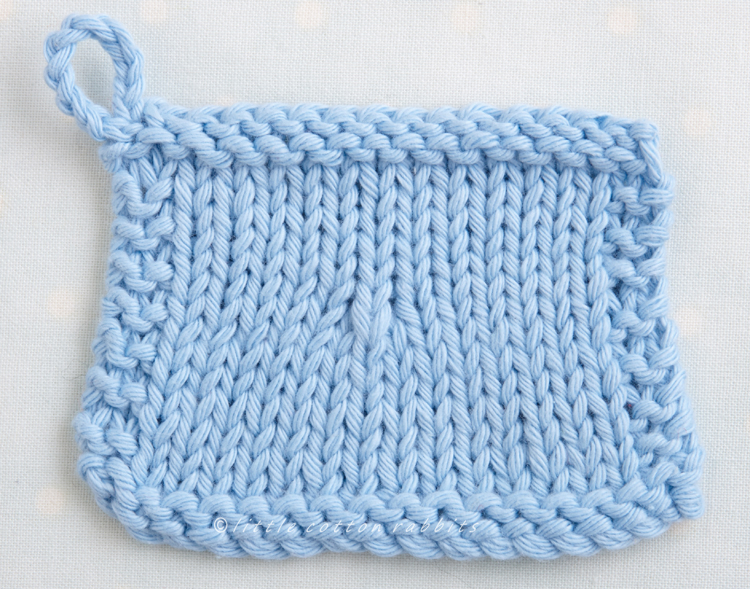
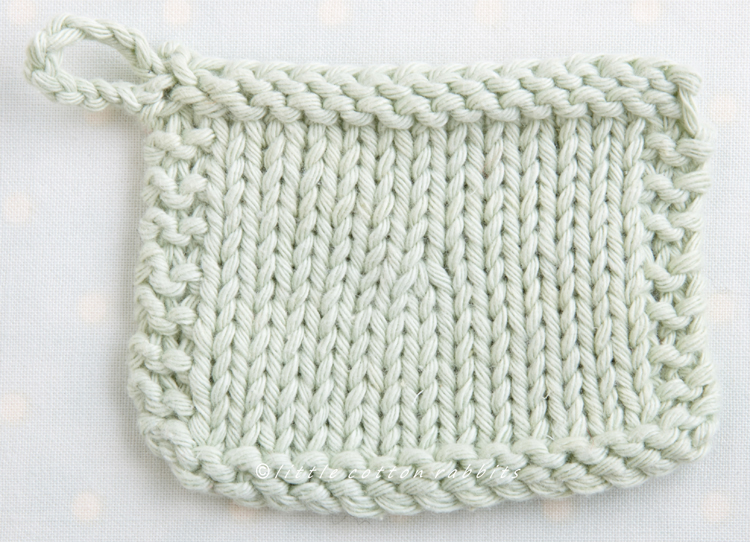
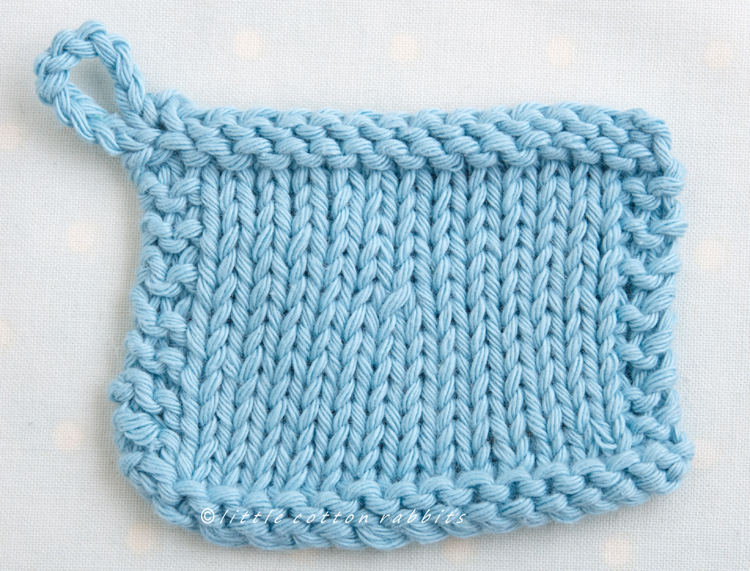
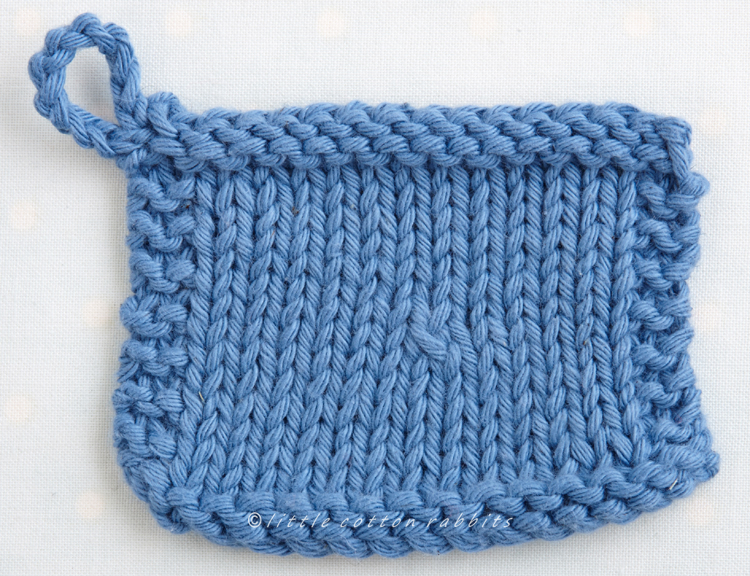
This is a post that I’ve been planning to write for a good long while. It details the increase methods most used in my range of Little Cotton Rabbits patterns, with pictures for each method and details of their specific characteristics so that they can be compared and contrasted. If you would like a copy to download and print there’s a free PDF file here.

A comparison of increases:

The table above compares six paired and mirrored increases. As you can see they are grouped vertically according to the direction in which the increase stitch leans (either to the left or to the right) and also grouped horizontally as matched symmetrical pairs which mirror each other.

All of the left leaning increases above can be substituted for each other without having to adjust the written pattern. This is because they are all made in the space between two existing stitches. The exact same goes for all of the right leaning increases. However, because each of these increase methods have a different impact on the stitches around them it is worth taking the time to understand the characteristics of each when deciding which will make the best substitute.

Below is a piece of knitting that compares the three left leaning increases detailed above, showing the impact that each of these increases has on the rows above and below it.

All three left leaning increase stitches are made on the blue row in the centre of the work. You can see how:

A: M1A impacts the row that the increase is made on, and creates the first full stitch on the pink row above
B: M1L impacts the row directly below in gold, and creates the first full stitch on the current row
C: KLL impacts and distorts the 2 rows below in pale yellow and gold, and creates the first full stitch on the current row

If you are making the increases in a pattern of lateral colour change stripes you will want to consider whether you start the stripes on the row prior to the increases or on the increase row itself as your stripes will either have neat transitional lines or steps depending on which of the increase methods you choose to use and where you place them.

. . . . . . . . . . . . . . . . . . . . . . . . . . . . . . . . . . . . . . . . . . . . . . . . . . . . . . . . . . . .

Left Leaning Increases:

KLL: Knit Left Loop (also known as LLI: Left Lifted Increase):

Method: Knit into the left leg of the stitch two rows below the stitch you have just worked by inserting the tip of left needle into the stitch from behind and bringing the loop onto the left needle. Insert the tip of the right needle into the back of the loop and knit, so making an extra stitch.

One of the โ€˜lifted increasesโ€™, this is an increase to use when what matters most is invisibility, and it works particularly well for knitted toys which are going to be firmly stuffed, as it creates a nice tight fabric without a gap for the stuffing to show through. Along with its symmetrical pair (KRL) this is the tightest increase method, giving the least visible result.

This is an increase best used on single colour stocking stitch. It does not work well with stripes as it distorts the two rows below the increase, so you need to be aware of that when planning the placement of any stripes.

. . . . . . . . . . . . . . . . . . . . . . . . . . . . . . . . . . . . . . . . . . . . . . . . . . . . . . . . . . . .

M1L: Make 1 Left:

Method: With the left hand needle pick up the connecting strand between the two needles from the front and knit into the back of the loop. If you find this too tight for your liking you can substitute M1A (make one away) which will give a looser increase.

This is probably the most popular left leaning increase method and uses the strand that runs between two stitches that are already on the needle. If you are a tight knitter this can be quite fiddly to work, so it helps to use needles with very pointed tips. Because you are using the strand that connects two already worked stitches this can cause these stitches to be slightly distorted, as it takes a little length of yarn from them both. To minimise this try to use the narrow tip of the needle when working the increase rather than stretching the connecting strand by pulling it all the way on to the needle.

. . . . . . . . . . . . . . . . . . . . . . . . . . . . . . . . . . . . . . . . . . . . . . . . . . . . . . . . . . . .

M1A: Make 1 Away:

Method: Make a loop with the working yarn over the right needle tip so the tail is pointing backwards/away from you. On the following row you purl into this loop as normal in order to create a new stitch.

This creates a similar increase to M1L above but makes the increase one row later in the work and a little looser as the connecting strand between stitches is wrapped around the needle and so has more length to it. This results in a slightly more visible hole which can be minimised if you wrap the yarn tightly.

Its a nice increase to use on clothing as it stretches well and causes less distortion to the stitches around the increase.

. . . . . . . . . . . . . . . . . . . . . . . . . . . . . . . . . . . . . . . . . . . . . . . . . . . . . . . . . . . .


Right Leaning Increases:

KRL: Knit right Loop (also known as RLI: Right Lifted Increase):

Method: Knit into the right leg of the stitch one row below the next stitch on the left needle. Do this by inserting the tip of the right needle into the stitch from the back and bringing the loop up onto the left needle, then knit this loop as normal, so making an extra stitch.

One of the โ€˜lifted increasesโ€™. This is an increase to use when what matters most is invisibility, and it works particularly well for knitted toys which are going to be firmly stuffed as it creates a nice tight fabric without a gap for the stuffing to show through. Along with itโ€™s symmetrical pair (KLL) this is the tightest increase method, giving the least visible result.

This is an increase best used on single colour stocking stitch. It does not work well with stripes as it distorts the two rows below the increase so you need to be aware of that when planning the placement of any stripes.

. . . . . . . . . . . . . . . . . . . . . . . . . . . . . . . . . . . . . . . . . . . . . . . . . . . . . . . . . . . .

M1R: Make 1 right:

Method: With the left hand needle pick up the connecting strand between the two needles from behind and knit into the front loop to create an extra stitch. If you find this too tight for your liking you can substitute M1T (make one towards) which will give a looser increase.

This is probably the most popular right leaning increase method and uses the strand that runs between two stitches that are already on the needle. If you are a tight knitter this can be quite fiddly to work, so it helps to use needles with very pointed tips. Because you are using the strand that connects two already worked stitches this can cause these stitches to be slightly distorted, as it takes a little length of yarn from them both. To minimise this try to use the narrow tip of the needle when working the increase rather than stretching the connecting strand by pulling it all the way on to the needle.

. . . . . . . . . . . . . . . . . . . . . . . . . . . . . . . . . . . . . . . . . . . . . . . . . . . . . . . . . . . .

M1T: Make 1 towards:

Method: Make a loop with the working yarn over the right needle tip so the tail is pointing forwards/towards you. Note: In order to get a neat finish you will need to purl into the back loop of this stitch on the following row.

This creates a similar increase to M1R above but makes the increase one row later in the work and a little looser as the connecting strand between stitches is wrapped around the needle and so has more length to it. This results in a slightly more visible hole which can be minimised if you wrap the yarn tightly.

Its a nice increase to use on clothing as it stretches well and causes less distortion to the stitches around the increase.

. . . . . . . . . . . . . . . . . . . . . . . . . . . . . . . . . . . . . . . . . . . . . . . . . . . . . . . . . . . .

Other Increases:

KFB: knit front and back:

This is probably the method of increasing that most people learn when they are first starting out with knitting, possibly because it is so simple. It does however make a very visible bar at the base of the increase stitch and so is not the best choice if you want a neat and tidy finished result to your work, (it is also know as a bar increase).

You work it by simply knitting into a stitch as normal and then before slipping that stitch from the left needle you knit into the stitch again, but this time through the back leg, so creating two stitches from one.

Because all of the other increase methods detailed here work by creating an increase stitch between two existing stitches it is not possible to simply substitute KFB without making adjustments. So if a pattern reads:

K2, KLL, K1, KLL (5 stitches)
then in order to use KFB instead of the KLL increase you would need to work:

K1, KFB, KFB (5 stitches).

The KFB increase does have itโ€™s uses as a decorative increase, and I do use it occasionally in my patterns for this reason.

. . . . . . . . . . . . . . . . . . . . . . . . . . . . . . . . . . . . . . . . . . . . . . . . . . . . . . . . . . . .

Other sources of information and tutorials:

There are lots of tutorials and videos available on the internet that demonstrate how to work these increase techniques. These can form an invaluable resource for any knitter who wants to hone their craft. Because itโ€™s not length of time that creates an experienced knitter, but the depth and breadth of their knitting skill base.

Here are a few of my favourite sites which have either good video or step by step tutorials for these increase methods (and many other knitting techniques too):

โ€ข Nimble Needles

โ€ข Very Pink Knits

โ€ข Knitting Help

โ€ข Purl Soho