




crafts & knitting · knitting tips

Knitted Decrease Methods for LCR patterns

This post details the decrease methods most used in my range of Little Cotton Rabbits patterns, with pictures for each method and details of their specific characteristics so that they can be compared and contrasted. I’ve also put together a PDF file that you can download to keep or print out if preferred: Download PDF file

. . . . . . . . . . . . . . . . . . . . . . . . . . . . . . . . . . . . . . . . . . . . . . . . . . . . . . . . . . . . . . . . . . . . . . . .

A comparison of decreases:

This table compares four paired and mirrored decreases, these are the decreases that I use most often in my patterns.
As you can see they are grouped vertically according to the direction in which the decrease stitch leans (either to the left or to the right) and also grouped horizontally as matched symmetrical pairs which mirror each other.

. . . . . . . . . . . . . . . . . . . . . . . . . . . . . . . . . . . . . . . . . . . . . . . . . . . . . . . . . . . . . . . . . . . . . . . .

Double decreases:

CDD: centred double decrease:

This is a lovely decrease that removes 2 stitches from the work at the same time. As its name suggests, it is centred and therefore symmetrical. I use it a lot because it is so neat and attractive.

The most important thing to remember is to begin by slipping the two stitches TOGETHER and NOT one at a time. This twists them and changes their order and is vital to creating the neat and symmetrical finish.

Method:
Slip 2 stitches together as if to Knit them,
Knit the next stitch,
and then pass the 2 slipped stitches over it and off the needle.

. . . . . . . . . . . . . . . . . . . . . . . . . . . . . . . . . . . . . . . . . . . . . . . . . . . . . . . . . . . . . . . . . . . . . . . .

Right Leaning decreases:

K2tog: Knit two together:

This is a simple method for decreasing a single stitch on the right (front) side of the work, and is probably the best known method of decreasing by one stitch.

Because the left stitch crosses in front of the right stitch this creates a decrease that leans towards the right.

Method: Knit two stitches together at the same time, in exactly the same way that you would Knit a single stitch.

. . . . . . . . . . . . . . . . . . . . . . . . . . . . . . . . . . . . . . . . . . . . . . . . . . . . . . . . . . . . . . . . . . . . . . . .

P2TOG: Purl two together:

This creates a right leaning decrease, identical to K2tog above, but is worked on the wrong (reverse) side of the work.

Method: Purl two stitches together at the same time, in exactly the same way that you would Purl a single stitch.

I prefer to work decreases on the right (front) side of the work so donโ€™t often use this decrease, unless it is part of a decorative stitch pattern. But I do use it when extra decreases need to be made that could not comfortably be fitted in on the previous right side row.

. . . . . . . . . . . . . . . . . . . . . . . . . . . . . . . . . . . . . . . . . . . . . . . . . . . . . . . . . . . . . . . . . . . . . . . .

Left Leaning decreases:

P2tog tbl: purl two together through the back loops:

This stitch creates a left leaning decrease, identical to SSK below, but is worked on the wrong (reverse) side.

Method: Purl 2 stitches together through the back loops.

This is done in order to twist the stitches and swap their positions, so that from the front of the work the right stitch crosses in front of the left stitch, creating a decrease that leans towards the left. This can be a little tricky to work, so it helps to have needles with pointy tips.

I prefer to work decreases on the right (front) side of the work so donโ€™t often use this decrease, unless it is part of a decorative stitch pattern. But I do use it when extra decreases need to be made that could not comfortably be fitted in on the previous right side row.

. . . . . . . . . . . . . . . . . . . . . . . . . . . . . . . . . . . . . . . . . . . . . . . . . . . . . . . . . . . . . . . . . . . . . . . .

SSK: Slip, slip, knit:

This is a simple method for decreasing a single stitch on the right (front) side of the work. Because the right stitch crosses in front of the left stitch this creates a decrease that leans towards the left.

Please note: It is important to slip each stitch individually from the left to the right needle in Step 1 below, and to slip both stitches together at the same time from the right needle back to the left needle in Step 2.

Method:
Step 1: Slip a stitch (as if to Knit it) to the right-hand needle, slip a second stitch in the same way

Step 2: Slip both stitches together back to the left-hand needle and Knit them together through their back loops.


There is however a problem with this decrease stitch which occurs when it is used in a stacked way over several alternate rows. And that is because the SSK decrease goes against the natural direction of regular Knit and Purl knitting stitches. The SSK decrease stitch leans to the left and yet on the following row when you work a normal Purl stitch above the decrease this naturally leans to the right.

The result of this is a stepped line of decreases in the work, like a zig-zag pattern, and the finished result is not particularly neat (see the green sample below).

So, in order to smooth the step-like appearance we can use a little trick. There are several different ways of doing this, if youโ€™d like to explore that further then please google โ€˜smooth SSK knittingโ€™ or โ€˜neater SSK knittingโ€™ and this will bring up a host of video tutorials and you can compare and decide which is your favourite method, my favourite is below.

My preferred method is to work the SSK decrease exactly as described at the top of the page. And then, on the following wrong side row, Purl the single stitch above it through the back loop (PTBL).

This twists the stitch that is above the decrease slightly, making it change direction so that it lies a little flatter, and creates a much smoother line of decreases (see the blue sample above):

This method of smoothing the stacked line of decreases comes in very handy in a couple of my patterns: especially the nose of the foxes, the bib of the dungarees, the armholes of the cable panelled sweaters. But to be honest, for the sake of neatness, I always PTBL the stitch above any SSK decreases.

. . . . . . . . . . . . . . . . . . . . . . . . . . . . . . . . . . . . . . . . . . . . . . . . . . . . . . . . . . . . . . . . . . . . . . . .

Other sources of information and tutorials:

There are lots of tutorials and videos available on the internet that demonstrate how to work these decrease techniques. These can form an invaluable resource for any knitter who wants to hone their craft. Because itโ€™s not length of time that creates an experienced knitter, but the depth and breadth of their knitting skill base.

Here are a few of my favourite sites all of which have good video or step by step tutorials for these decrease methods (and many other knitting techniques too):

โ€ข Nimble Needles

โ€ข Very Pink Knits

โ€ข Purl Soho

countryside · crafts & knitting · in the woods · wildlife

August: Autumn comes early


Hello there, this is the first blog post from my new blogging home over on wordpress (all previous posts are copies from my former typepad blog), so if you are a subscriber and receiving it by email I have my fingers crossed that this reaches you, and finds you well.

At the beginning of August we had a return to hot and dry conditions here and that has once again had a big impact on the woods and countryside, accelerating season change. As Toby and I walk through the woods now, great drifts of leaves are loosened from the trees at the slightest breath of breeze. But they are not like the leaves that normally fall in autumn, instead they are baked brown, sun-shrivelled and dry as paper. Each footfall sounds a crisp crunch and there is no hope of us surprising any unsuspecting wildlife for a brief encounter, as they hear us coming a mile away.

Autumn come so soon, leaves me feeling a little melancholy. Summer has been harsh this year, and so tough on the trees and wildlife. Everything has been hanging on, rather than flourishing.

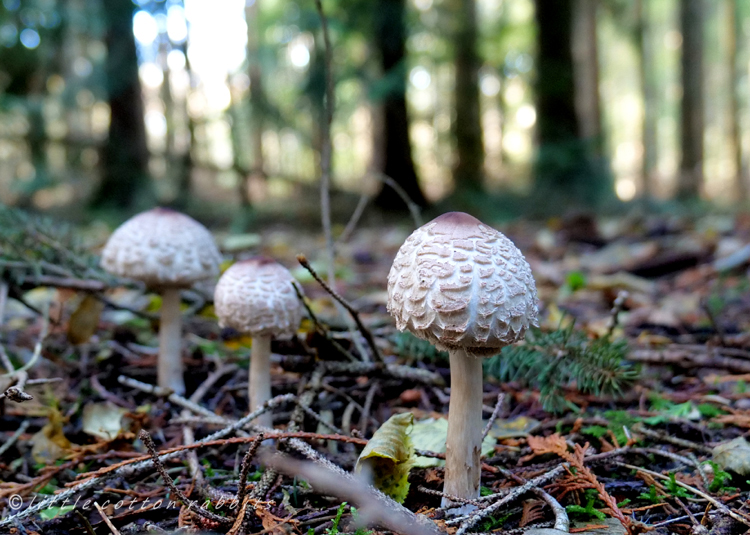
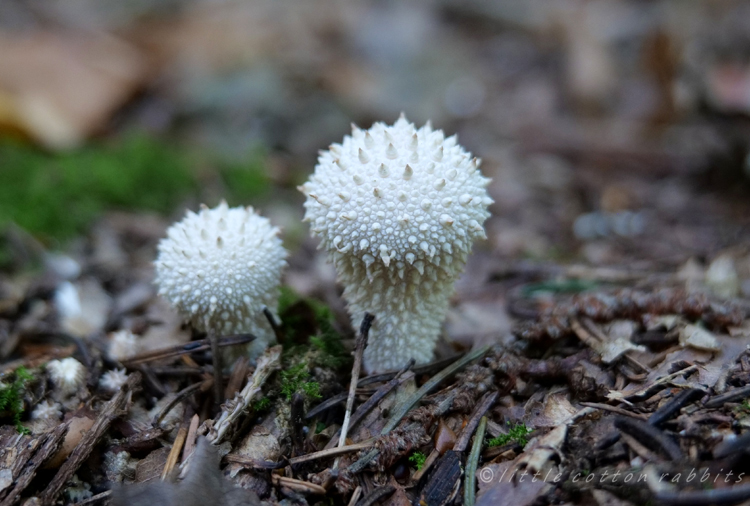
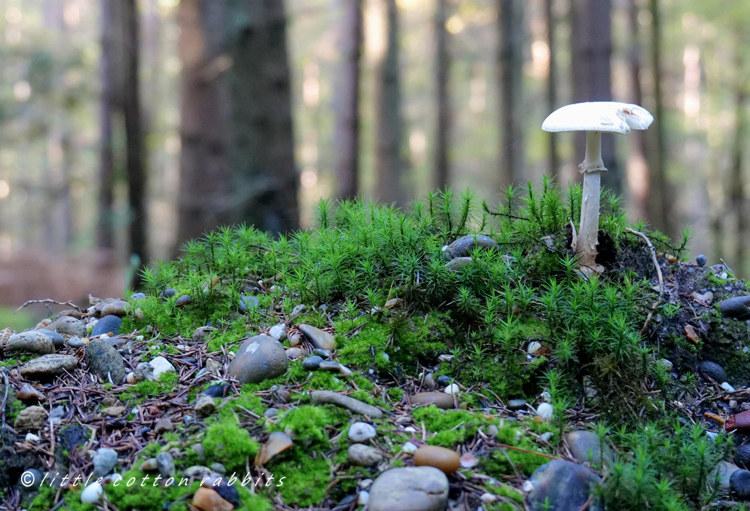
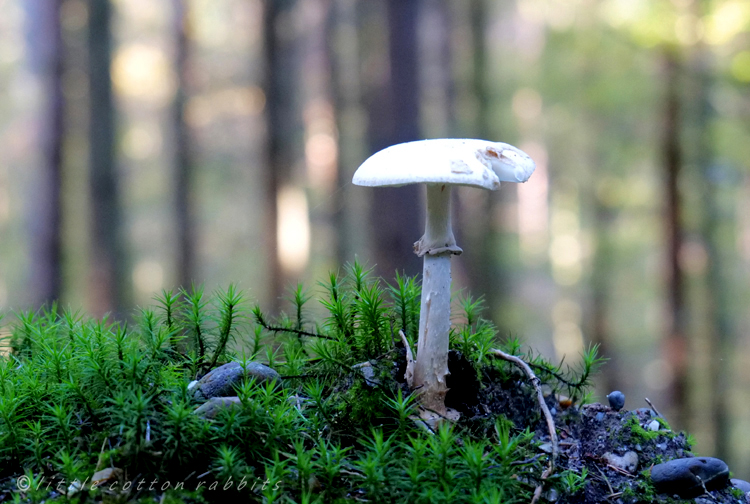
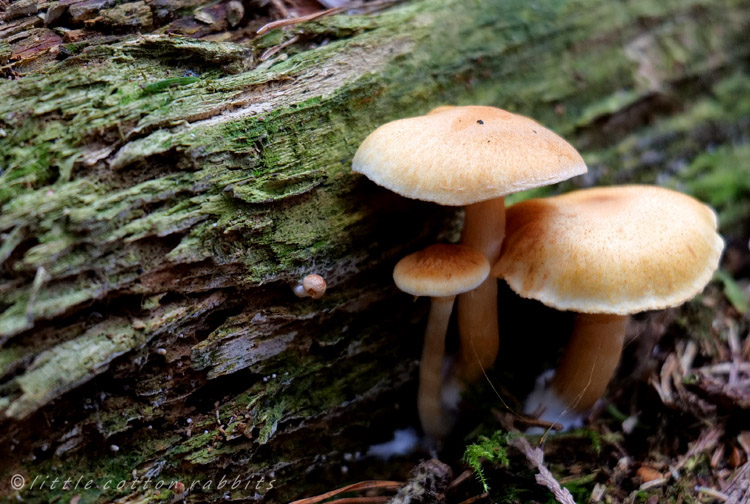
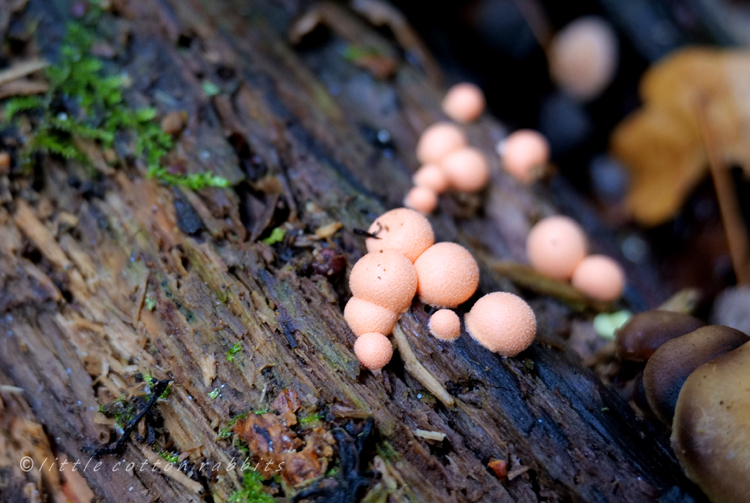
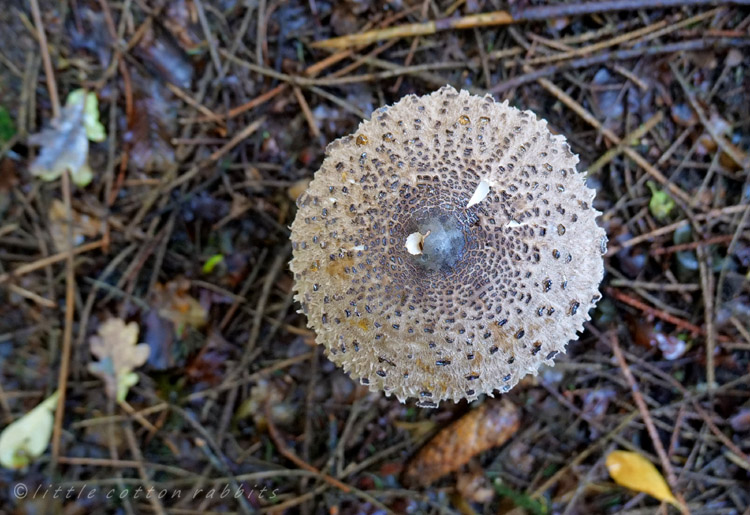
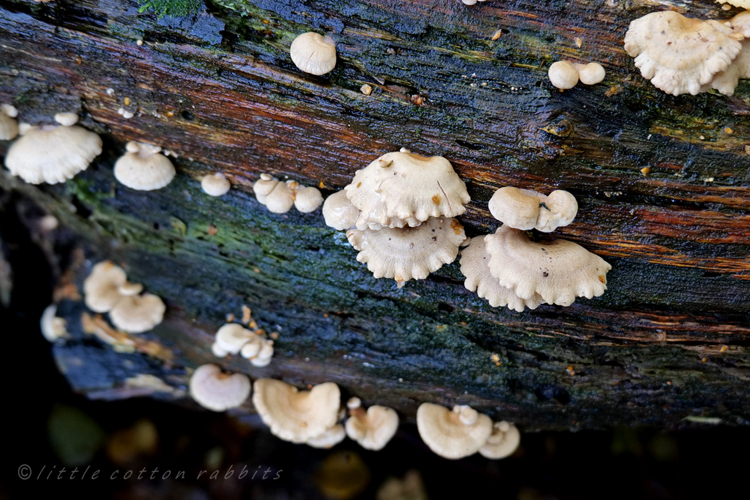
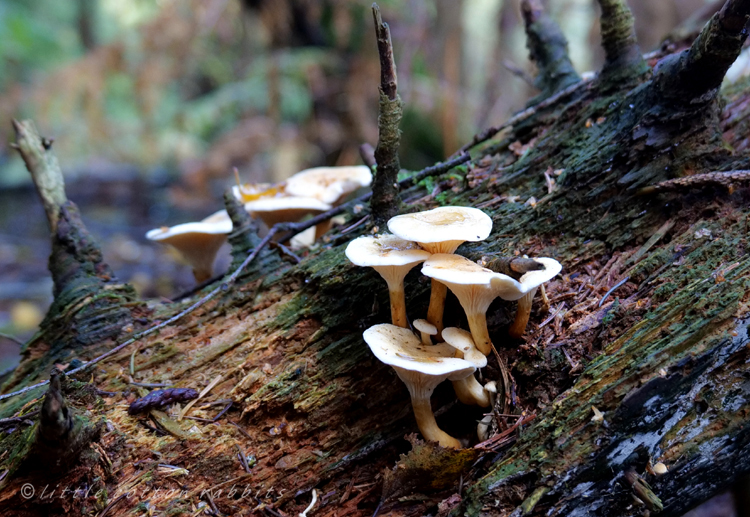
One of the nice things though about late summer wood walks is finding feathers, pine cones and other discarded treasures from the forest floor. This year I’ve added to my feather collection with a host of spotted woodpecker feathers, all found together from a kill, most likely a sparrowhawk; a couple of pheasant feathers; a long green woodpecker feather; and lots of tawny owl feathers. I also found a beautifully speckled moorhen egg along the riverbank. And already there are a lot of fungi appearing in the woods, some of them like the ‘chicken of the woods’ sulphur polypore are rather spectacular, you don’t get a sense of scale in the photo above but it was easily 2ft across. I’m hoping it will be a good season for fungi as I get quite excited to see all the different types that appear in the woods around us.

Back at home I’ve been knitting lots again: socks and a little neckerchief scarf in autumny colours; and I’ve also been making some animals to photograph for new front covers of my earlier patterns: the rabbits, elephants, foxes and mice. I’ll keep you posted about progress and updates to the existing patterns.

My main focus at the moment though is getting my images permanently imported into the old blog posts in this new blog home (as images will otherwise disappear at the end of september when typepad shut down)

So far I am making good progress, all of my tutorial posts now have secured images, and every single post from July 2025 to January 2023 also now have permanent images. Next I will be prioritising posts about knitting and patterns and then my nature and wildlife posts (you can find all of these categories and more on the sidebar of my blog page). I will be working backwards chronologically and will not stop until the majority of my blog posts have permanent images. I am pretty sure I now have all of the images saved in order to be able to achieve that.

If you have any favourite posts of mine that you would also like me to prioritise please do let me know in the comments above (scroll to the top of the post or reply to the emailed version of this blog post to leave a comment). I will do my best to accommodate any requests.

Well, I’ll be back later in the month, I still have a pending post about knitted decreases, the companion piece to my knitting increases post earlier this year, I hope to finish that soon and I will be pattern writing again, though dividing my time between that and blog reconstruction will mean it is a slow process.

Very best wishes and thank you as always for accompanying me on my blogging journey here in my new home, J xx

countryside · crafts & knitting · foxes in my garden · garden stuff · in the woods · wildlife

July: High Summer


The beginning of July was so very hot and dry here, too hot to sleep comfortably or to knit in the daytime, and so dry that the countryside was soon looking very parched. The cows knew something though (cows lying down is supposedly a sign that rain is imminent) and by the middle of the month the welcome rain did sweep in, bringing freshness and quenching the countryside back to a lush green again. Toby and I have enjoyed our regular walks so much more in the welcome cooler temperatures, and he has slept better too – he is so restless on very hot nights and often up wondering around the house, meaning that one of us needs to be up with him too, so it’s been nice to have some unbroken rest again.

Since launching the squirrels patterns at the beginning of the month I’ve been taking things slowly; starting my quiet days with breakfast in bed and some simple sock knitting; tidying and organising the kitchen a little; pottering around without much of an aim and generally enjoying nothing much on my to do list other than taking care of Toby.

Well, there’s not much else to report from here really. Summer is my least favourite season but even so there are always things to delight in, I’ve detailed some of them below in my monthly nature notes.

I hope that you’re comfortable and content where you are,

J x


Nature notes from July:

  • Week 1:ย  So hot and dry, uncomfortably so at daytime temps of 32 degrees and night time above 20 degrees
  • Week 2:ย  An amazing sight on the evening of July 10th when a cloud of ladybirds flew over, many thousands by the look of it, many settled on the hawthorn hedging where there were quite a lot of aphids to feed on. I have never seen so many at one time, the air was thick with them for around half an hour
  • Week 3:ย  Rain and cooler temperatures arrive, so very welcome and Toby and I happily walk in the light rain
  • Week 4:ย  All of the branches of the plum tree in our garden are weighed down under the enormous weight of a bumper crop this year. I’ve also noticed that the wild plum trees are also bowed over by the abundance of their fruit. Other things that I’ve noticed many more of this year than usual are insects and butterflies, especially the Ringlet (most years I only see a handful but they have been most numerous this year). It must be down to the hot and dry conditions throughout spring, favouring certain species and bringing about a greater number than usual.