crafts & knitting · knitting tips

A neat edge to a top down seam, a tutorial

There are occasions when you want to create a really neat join between two seamed pieces, especially when this join is at the top of the piece and so very visible. Within my patterns this occurs at the top edges of both the removable shoes (soon to be released) and some of the designs in my ‘bags, backpacks and baskets’ pattern.

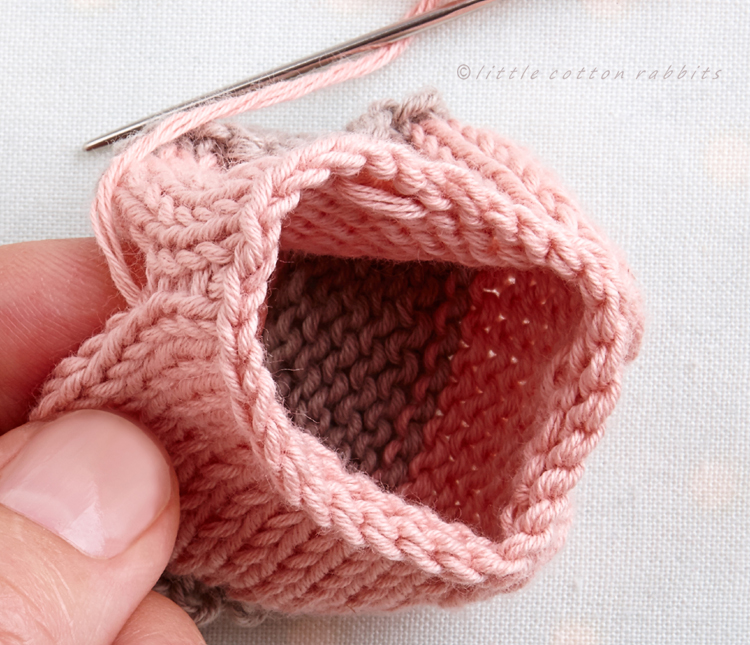
Above is a picture of the top seam that you’re aiming to achieve:

And here’s a little tutorial on how to work it…

Normally when you cast off you cut the work from the ball and thread this tail through the final stitch on the needle in order to secure the cast off row and prevent it from unravelling. But that creates a little nubbin at the end of the row and can interfere with a neat join when you start to sew an attaching seam.

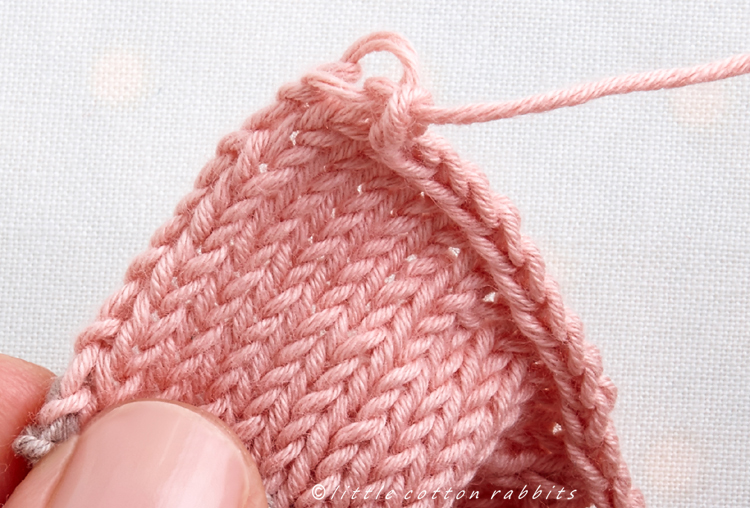
So instead, when you have your last stitch at the end of your cast off row, cut the work from the ball and pull on the loop of this last stitch, like so:

Keep pulling that loop until the cut tail is pulled all the way through, effectively unravelling half of this final stitch:

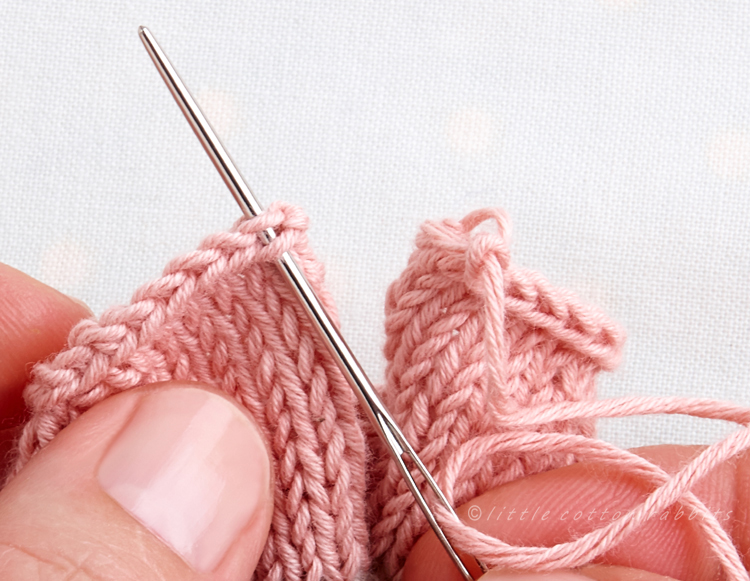
Then thread a tapestry needle with this cast off tail end and sew through both arms of the edge-most stitch on the opposite side of the seam:

Then sew back across the gap and down through the stitch that the tail end is emerging from:

In doing this you have replicated a cast off edge stitch to span the top of the seam between the two pieces (see image at the top)

And then you can continue seaming the two pieces together using mattress stitch ( Mattress stitch seaming tutorial can be found here)

I hope this helps you to get neat and attractive edges to the seams at the top of your removable shoes and bags, happy seaming ๐Ÿ™‚

J x

crafts & knitting · knitting tips

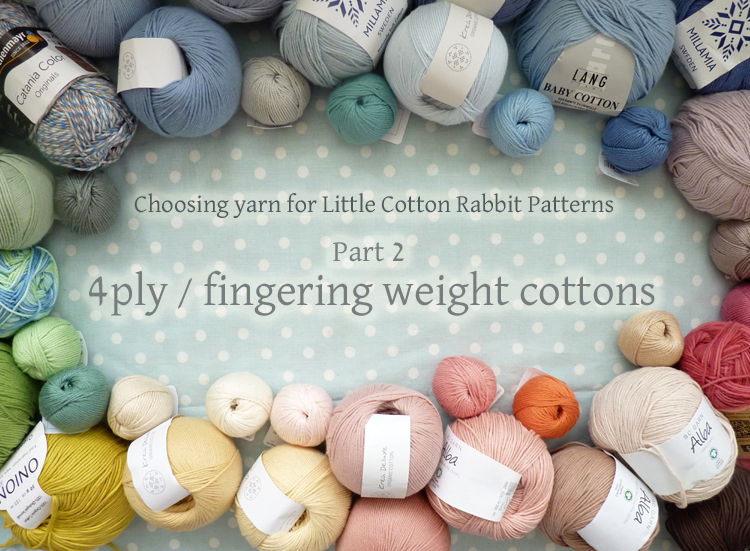
Choosing Yarns for the Little Cotton Rabbit Patterns, (part 2)

One of the challenges of writing a knitting pattern is that yarn manufacturers are constantly changing their collections – developing new yarns, discontinuing others and creating new colourways in existing yarns. It is impossible to keep up with these changes within the confines of a written pattern and so instead I’ve decided to write up some posts here on the blog with tips on choosing potential yarns for my little cotton rabbits patterns. The beauty of these notes being in a blog post here is that I can keep it updated as time goes on, so that if you check back in the future this post will hopefully reflect more accurately what yarns are available at that time.

For this post I’m going to focus on the yarns for the cotton 4ply/fingering weight yarns that I use for the clothes, there’s already a post written about the yarns used for knitting the animal patterns here

Below I’ve compiled a list of my current favourite yarns for knitting the clothes in, along with descriptions of what in particular I like or dislike about them. For the most part I recommend 4 ply/fingering weight cotton yarns.

So, why cotton and why 4 ply/fingering weight?

There are a few reasons that the clothing is worked in a lighter weight yarn than that used for the animals.

  • Firstly using a thinner yarn and smaller needles means that there are more stitches across a row to play with, meaning that designs can be more intricate and give a finer appearance than would be achieved by knitting the clothing in the same worsted weight yarn as the animals.
  • Secondly, I like the contrast between the knitted fabric on the clothing and that of the animals – this is especially accentuated when the animal is worked in a fuzzy mohair blend yarn with the clothing in a smooth cotton. I particularly like using cotton yarn for colourwork patterns (using 2 or more colours) because with cotton yarns the stitch definition is crisp and the patterns look more defined.

Fingering weight (also known as 4ply) is a light weight yarn. Technically speaking it is designated as ‘superfine 1’ by the yarn standards from the Craft yarn council with 14 wraps per inch (meaning that if you wound it around say the handle of a wooden spoon so that there were no gaps between the strands there would be 14 wraps of yarn in an inch). In practice there is a great deal of variance between different yarns marketed as fingering weight and even different yarns from the same manufacturer vary surprisingly in thickness and knitted tension, let alone those between different manufacturers. FYI Ravelry has a really useful table with yarn weight comparisons.

A note on different cotton finishes:

Cotton yarns come in two different finishes:

1. A soft cotton which retains the natural properties of cotton. It behaves much more like a woollen yarn, with fibres which cause the stitches to bind together, resulting in a softer and more flexible knitted fabric. Many of these are produced from organic cotton (look out for organic certification)

2. Mercerised/mercerized cotton, which is a cotton yarn that has been treated under tension with caustic alkali (sodium hydroxide) and then neutalised in an acid bath in order to impart strength and lustre to the fibres. It tends to be a shiny, rigid yarn which is stiffer and more rope-like than natural cottons as any natural elasticity is removed. When knitted up the stitches stay distinct from eachother because of the lack of soft surface fibres.

Personally I am not a fan of mercerised yarn, it uses toxic chemicals in it’s production process and I much prefer the knitted fabric that is created by natural soft and untreated cottons, preferably organically produced ones.

A note on comparing yarns:

Although there are industry standards for yarn weights in practice these are only a guide, and I’m sure that if you knit a lot you’ll already have experienced anomalies. For instance Millamia naturally soft cotton that is mentioned below is classed as a 5ply/sportweight yarn and yet I find it thinner than most of the 4ply/fingering weight yarns. One way that I judge whether a yarn is likely to work is to compare the length of yarn per ball. Most of the yarns below come in 50gm balls so by comparing the yarn length per ball you can make an estimation of how thick or thin the yarn strand is (please note this only really works when comparing yarns of the same fibre – it would not work if you compare a cotton yarn with a woollen yarn).

So here’s a little comparison of the yarns below, with thickness based on length per 50 gm ball, and listed from thickest strand to thinnest:

Yarn and colours must-have 4ply: 125m

Sheepjes Catona: 126m

DMC Natura Just Cotton: 155m

BCGarn Alba: 160m

Drops Safran: 161m

Krea deluxe: 165m

Millamia naturally soft cotton: 165m

Scheepjes Cotton 8: 170m

Scheepjes Sunkissed: 170m

KPC Gossyp: 180m

My favourite 4ply/fingering weight yarns for Little Cotton rabbit animal patterns:

Note, I’ve linked to the Ravelry pages for each of these yarns, as that way you’ll be able to see projects made from the yarns, what others think of the yarns and also links to local stockists. At the bottom of each yarn description I’ve also linked to the manufacturers own website (where there is an SSL secure website).
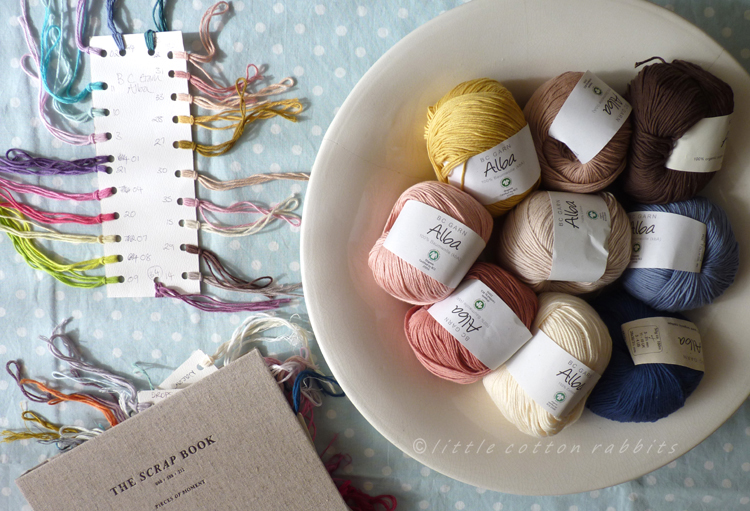
BC Garn Alba

This yarn is my number one choice for knitting dresses and sweaters in. There’s an array of beautiful subtle colours: softly muted pinks; warmly spiced mustards and misty chalky blues, along with some more vibrant, zingy shades too. The yarn is 100% organic cotton and ecologically produced with GOTS (Global Organic Textile Standard) certification. It’s a soft combed cotton, plied with a loose twist.

50gms: 160m (175 yds).

(unfortunately BC Garn’s own website is currently not SSL secure so I’m not linking to it here)

……………………………………………………………………………………………………………………….

Krea Deluxe Organic cotton

This soft cotton yarn is a new discovery for me and I’ve only been using it for a few months, but it’s very quickly become a favourite. It’s organic cotton, GOTS-certified and produced in Europe (sown, grown and harvested without use of chemical pesticides and artificial fertiliser) and comes in the most amazing array of pastel shades in very subtle tones.

50gms: 165m (180yds)

Krea Deluxe website

……………………………………………………………………………………………………………………….
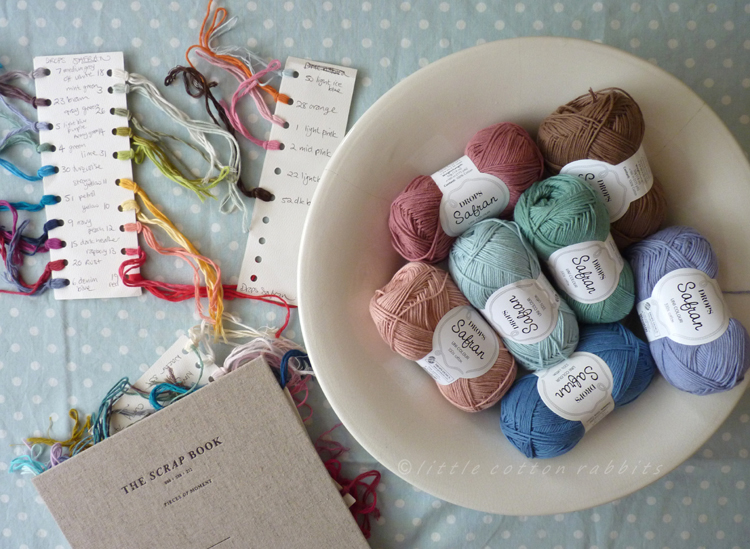
Drops Safran

This yarn is incredibly good value for money. Soft, S on S plied yarn which holds together well when worked with and it comes in a good usable range of colours. Actually designated 5ply, but is comparable to most of the yarns here designated as 4ply.

50gms; 161m (176 yds)

Drops website

……………………………………………………………………………………………………………………….
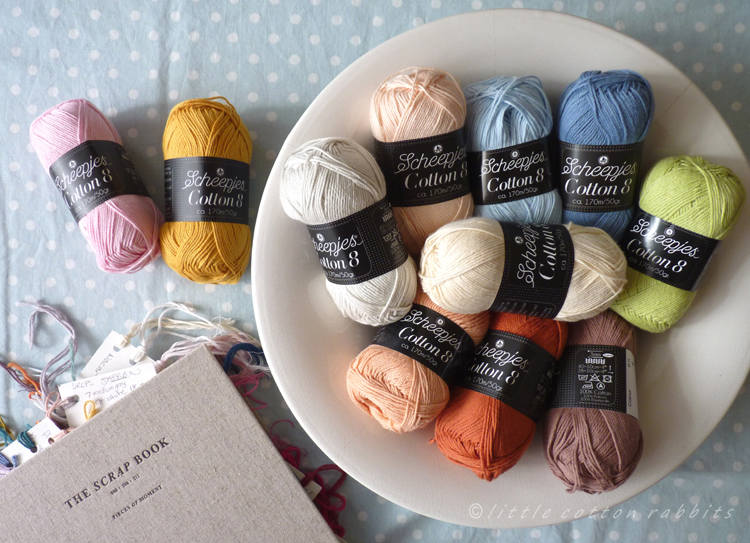
Scheepjes Cotton 8

A soft plied yarn, very good value and a great range of colours (mostly vibrant and bright shades). A little on the thin side.

50gms; 170m (186 yds)

Scheepjes website

……………………………………………………………………………………………………………………….

Scheepjes Sunkissed

Exactly the same as Scheepjes cotton 8 above, expect the sunkissed range is a variegated yarn – nice for extra interest. A soft plied cotton, a little on the thin side

50gms; 170m (186 yds)

Scheepjes website

……………………………………………………………………………………………………………………….
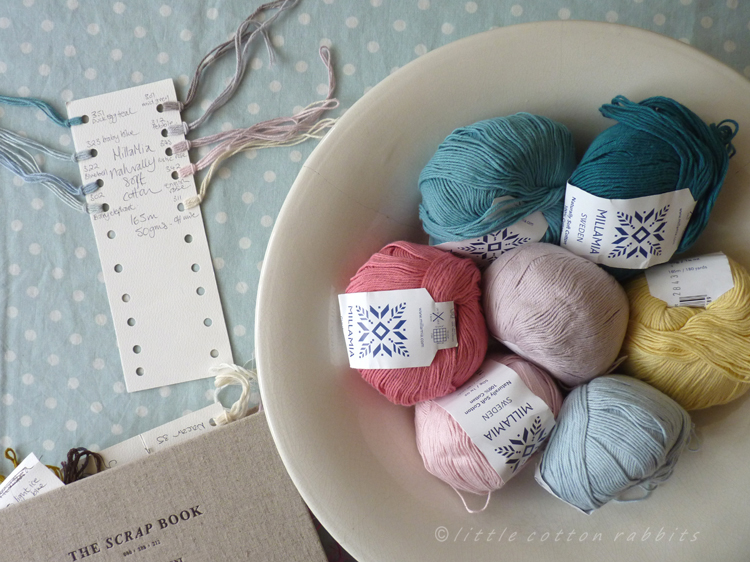
Millamia naturally soft cotton

This yarn seems to be classified as 5ply/sport weight (which is slightly thicker than 4ply) but I’ve actually found it thinner than most of the other cotton yarns mentioned here (see note above about comparing yarns).

Plied with a tight twist it comes in a rather limited range of mostly pastel colours.

50gms; 165m (180 yds)

……………………………………………………………………………………………………………………….
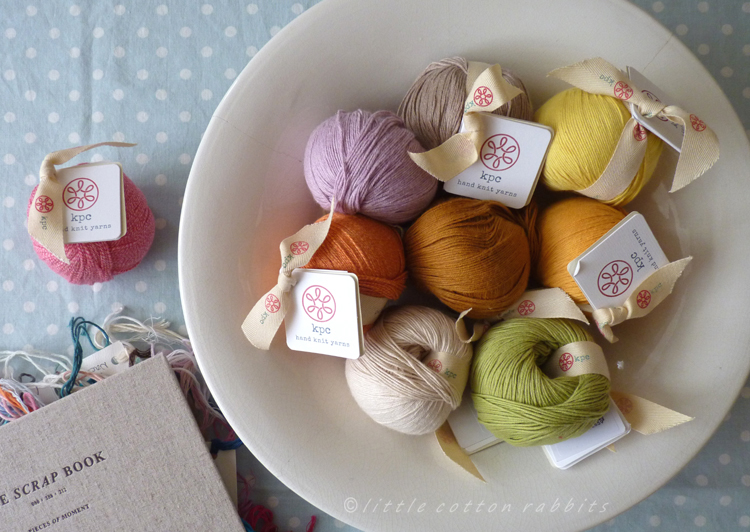
KPC gossyp 4ply cotton

Certified by the Organic Exchange, using cotton from certified organic cotton farms in China.

Soft cotton, plied and a little thinner than all others mentioned here and in a great range of colours

50gms: 180 m, (197 yds)

……………………………………………………………………………………………………………………….

DMC Natura Just Cotton

A great range of lovely colours but it is a splitty yarn (in that the strands easily separate which can make it slightly hard to work with and result in spilt strands) and it’s slippery, so the ball has a frustrating tendancy to unwind and get easily tangled. I find it easiest to knit this with blunt rather than pointed tip needles. All cotton yarn, S on S plied.

50gms; 155m (170 yds)

DMC website

……………………………………………………………………………………………………………………….

Yarn and colours must-have

Smooth mercerised cotton,

Although this yarn is classed as 4ply/fingering weight (on Love crafts) it’s more like 5ply (Ravelry’s classification) I find it quite thick, so you might find that it’s knitted in this come out a little larger.

This yarn comes in an amazing array of colours. It’s also very useful that there are 2 ball sizes as you can collect your favourite shades in the larger 50gm balls and use the small 20gm balls for colour highlights – it’s easy to build up a large palette of colours without having to spend a fortune. Good value.

20gms: 25m (27yds)

50gms: 125m (137 yds)

Yarn and colours website

……………………………………………………………………………………………………………………….

Scheepjes Catona / Scheepjes Catona Denim

Mercerised cotton yarn in a really great range of colours. It’s classified as 4ply but is much more of a sport weight and is one of the thickest yarns mentioned here. I tend to use it for the dungarees and the shorts. It also comes in 10gm, 25gm and 100gm balls.

50gms: 126m (138 yds) / 124m (136yds)

Scheepjes website

……………………………………………………………………………………………………………………….

Other 4ply cotton yarn suggestions:

Lang Baby Cotton sport

Plied soft cotton, 181m (198yds)

Onion Organic cotton

Certified organic cotton, soft and plied, 155m (170yds)
crafts & knitting · knitting tips

Choosing the yarns for little cotton rabbit patterns (part 1)


One of the challenges of writing a knitting pattern is that yarn manufacturers are constantly changing their collections – developing new yarns, discontinuing others and creating new colourways in existing yarns. It is impossible to keep up with these changes within the confines of a written pattern and so instead I’ve decided to write up some posts here on the blog with tips on choosing potential yarns for my little cotton rabbits patterns.ย The beauty of these notes being in a blog post here is that I can keep it updated as time goes on,ย so that if you check back in the future this post will reflect more accurately what yarns are available at that time.

For this post I’m going to focus on the yarns for the animals themselves rather than their outfits (a second post about the 4ply/fingering weight yarns that I use for the clothes is here).

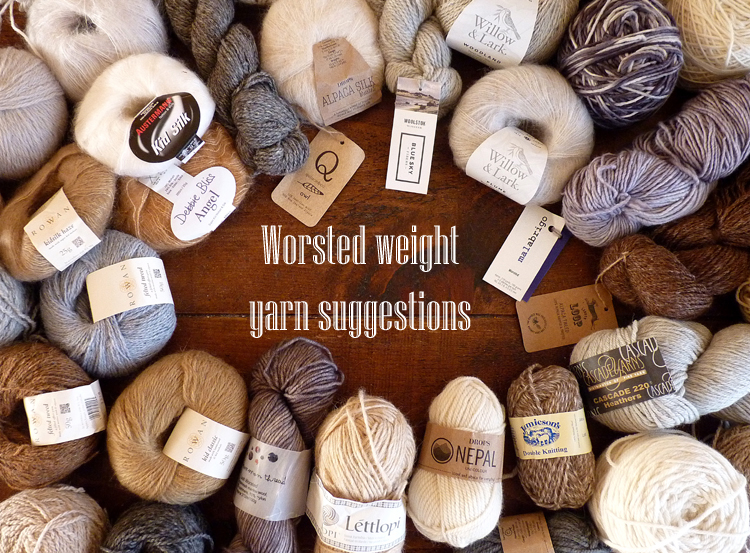
Below I’ve compiled a list of my current favourite yarns for knitting the animals in, along with descriptions of what in particular I like or dislike about them.ย For the most part I recommend worsted weight woollen blend yarns for the animals, although for the pig and the elephant I prefer smooth cotton DK yarns which give a more skin-like appearance (see below).


So, why Worsted weight?

Worsted weight (also known as 10ply) is midway between DK and Aran weight. Technically speaking it is designated as ‘medium 4’ by the yarn standards from theย Craft yarn councilย with 9 wraps per inch (meaning that if you wound it around say the handle of a wooden spoon so that there were no gaps between the strands there would be 9 wraps of yarn in an inch). In practice there is a great deal of variance between different yarns marketed as worsted weight andย even different worsted weight yarns from the same manufacturer vary surprisingly in thickness and knitted tension, let alone those between different manufacturers. FYI Ravelry has a really useful table with yarn weight comparisons. I do find however that overall yarns that are designated as worsted weight are the best to knit my animal patterns in (DK usually being too thin and Aran weight often too thick), worsted weight is usually just right – it’s my ‘Goldilocks’ yarn weight ๐Ÿ™‚


Important note on gauge and ball band information:

It is important to note that the information you’ll read about recommended needle size and gauge on theย ball band of any yarn is written with knitted garments in mind. When knitting garments you want to create a fairly loose knitted fabric that has a nice quality of drape. But when you are knitting toys or other objects that are three-dimensional and are going to be stuffed, knitting at a gauge suitable for clothing would be much too loose and mean that the stuffing showed through the gaps between stitches. This is the reason that I knit the toys with worsted weight yarn on 3mm (US 2.5) needles to give a gauge of 6 stitches and 9 rows per square inch (which is much tighter than recommended on worsted yarn ball bands) as then the resulting knitted fabric is nice and dense and doesn’t stretch enough to let the stuffing show between stitches.

……………………………………………………………………………………………………………………….


Favourite Worsted weight yarns for Little Cotton rabbit animal patterns:

Note, I’ve linked to the Ravelry pages for each of these yarns, as that way you’ll be able to see projects made from the yarns, what others think of the yarns and also links to local stockists. At the bottom of each yarn I’ve also linked to the manufacturers own website.


Cascade 220 Worsted / Cascade 220 Worsted heathers

A good strong pure wool yarn which comes in a huge range of dependable range of colours (by that I mean that in my experience the colours only vary a little between dye lots). It’s hard wearing so doesn’t pill easily or shed much fibre and knits up very well. The price is reasonable for the quantity. Put simply, it’s a perfect all-rounder yarn and great for knitting my animals.

Particular favourite shades are 2440 Vinci (a warm brown used for the bears and parts of the boy bunny above), 9600 Antique heather (used in the sheep and the boy bunny above), 8011 Aspen heather a lovely light grey good for bunnies or elephants, 9491 Greystone heather – a dark grey.

Cascade’s own website.

……………………………………………………………………………………………………………………….


Malabrigo worsted

This is a single ply worsted yarn which is beautifully soft and comes in lovely tonal colours. In my experience there can be a large degree of variance between dye lots so sometimes the skein I receive is not the exact colour I’d expected from looking at the computer image. That’s because it is kettle dyed in small batches but this also makes for such beautiful colours many of which have variation in tones throughout the skein which looks great on the knitted animals.ย Being a single ply yarn this is not a strong yarn so isn’t great for seaming with. Either use a different yarn to sew up the seams with or give the strand you sew up with a lot of extra twist in order to strengthen it (see the post here about seaming).

Particular favourite shades are Pearl and Polar morn (pale rabbity greys); SFO Sky and Comfy Junkie which have a lot of variance and make for extra interest; Rhodesian and glazed carrot are good for the fox; Roanoke, Dark Earth and Applewood are great for the bears.

Malabrigo website

……………………………………………………………………………………………………………………….


Blue Sky Woolstok

This is a lovely soft and strong marled yarn which gives extra interest to the knitted fabric. It’s comes in lots of greys, browns and natural shades that are perfect for knitting bunnies and bears in.

Bluesky website

……………………………………………………………………………………………………………………….


Quince and Co Lark is a lovely pure American wool yarn. It comes in a great range of colours, is really nice to knit with and has great stitch definition.

Quince and Co Owl

This is a lovely lofty rustic yarn which is soft and bouncy and has subtle variation of tone and texture throughout the strand. It’s composed of 50% American wool and 50% New Zealand alpaca. It’s a 2ply construction and is not particularly strong so may need extra twisting when seaming or sewing the seams with a stronger yarn. Because it’s lofty the animals may come out a tiny bit larger than those knitted in some of the other suggested yarns. There’s a great range of greys, browns and neutral colours perfect for knitting bears and bunnies in.

Quince and Co website

……………………………………………………………………………………………………………………….


Other noteworthy yarns…

De Rerum Natura Gilliat , a lovely heathered and rustic yarn that knits up beautifully and comes in a great range of browns, greys, creams, rusts perfect for knitting the animals in. Ethically produced and ecological. It is a little on the ‘tender’ side so can break if used for sewing the seams, so I substitute a similar shade of cascade or similarly strong yarn in order to sew the seams.

Drops Nepal, incredibly good value wool and alpaca mix yarn with a good colour range, a little on the thick side so watch your gauge

Uncommon Thread Lush Worsted, beautifully hand-dyed luxury with a touch of cashmere for larger budgets and very special projects

Madeline Tosh Vintage, beautiful tonal hand-dyed yarn, on the expensive side so great for special projects

Lettlopi, rustic and interestingly textured Icelandic wool in a great range of natural colours

Adriafil Lana Naturale Inca, great natural colours with tweed effects, alpaca wool blend yarn

Rowan Pure Wool Superwash Worsted, good colour range, very similar in character to the Cascade 220 mentioned above

MillaMia naturally soft aran, soft (like it says on the label) and a little on the thick side so you get a little less yarn per ball than with some other brands

……………………………………………………………………………………………………………………….

Yarn combinations:


I’ve always enjoyed knitting with 2 different strands of yarn held together. This can give an interesting texture and you can create your own bespoke finish. Most often I enjoy marrying one thin strand of mohair with a DK weight tweedy yarn. Here are some suggestions

1 strand of Rowan Felted Tweed DK with 1 strand of Rowan Kidsilk Haze

1 stand of Rowan Kid Classic with 1 strand of Rowan Kidsilk Haze

1 strand of Willow and Lark Woodland with 1 strand of Willow and lark Plume

1 strand of Orkney angoras St Magnus with 1 strand of Rico Essentials Super kid mohair silk

1 strand of Jamieson’s DK with 1 strand ofย Debbie Bliss Angel


Other very thin mohair mix yarns I’ve used (to be held double with another DK yarn):

Lana Grossa Silkhair

Austermann Kidsilk

ITO Sensai

……………………………………………………………………………………………………………………….

Favourite DK cotton blend yarns for the animals:

As mentioned above I prefer to knit the elephants and pigs in smooth cotton yarns that look a bit more like skin than fuzzy fur.ย With cotton yarns you’ll need a DK not a worsted weight. This is because cotton yarns are much bulkier and rigid and so a worsted weight cotton yarn would be too thick to achieve the gauge needed for the animals at the recommended needle size.

Stylecraft Classique Cotton DK, a good range of colours and a nice soft strong cotton

King Cole Cottonsoft DK, very soft cotton but still strong, nice colour range

Katia Cotton 100%, a DK cotton with a wide colour range

Patons 100% Cotton DK, mercerised cotton so has a sheen, strong, slightly thin but a great colour range

Phildar Phil Ecocoton, 100% organic cotton, soft and strong


……………………………………………………………………………………………………………………….


This is not an exhaustive list and I’ll be adding to this in future, so when I come across new yarns that I start using I’ll update this post.

Another great source of yarn inspiration is theย Ravelry group. You can look at the yarns that others are using and sometimes people also write up notes on what they thought of the yarn. You can see the yarn by looking up each individual project, for instance girl bunny.

Hope this helps, if you’ve found any yarns that you’d like to recommend please tell us all about them in the comments below.

(last updated on February 5th 2018)

Note: This is an un-sponsored post, I only mention yarns that I’ve bought with my own money and use in my own work.